Projects

Selected work

Projects

Two systems I built from scratch: a machine-learning framework in C++ with no ML libraries, and a spacecraft simulator that flies a full Earth-to-Moon mission through real solar-system gravity. Both were re-run in November 2026, and every number here comes from those runs.

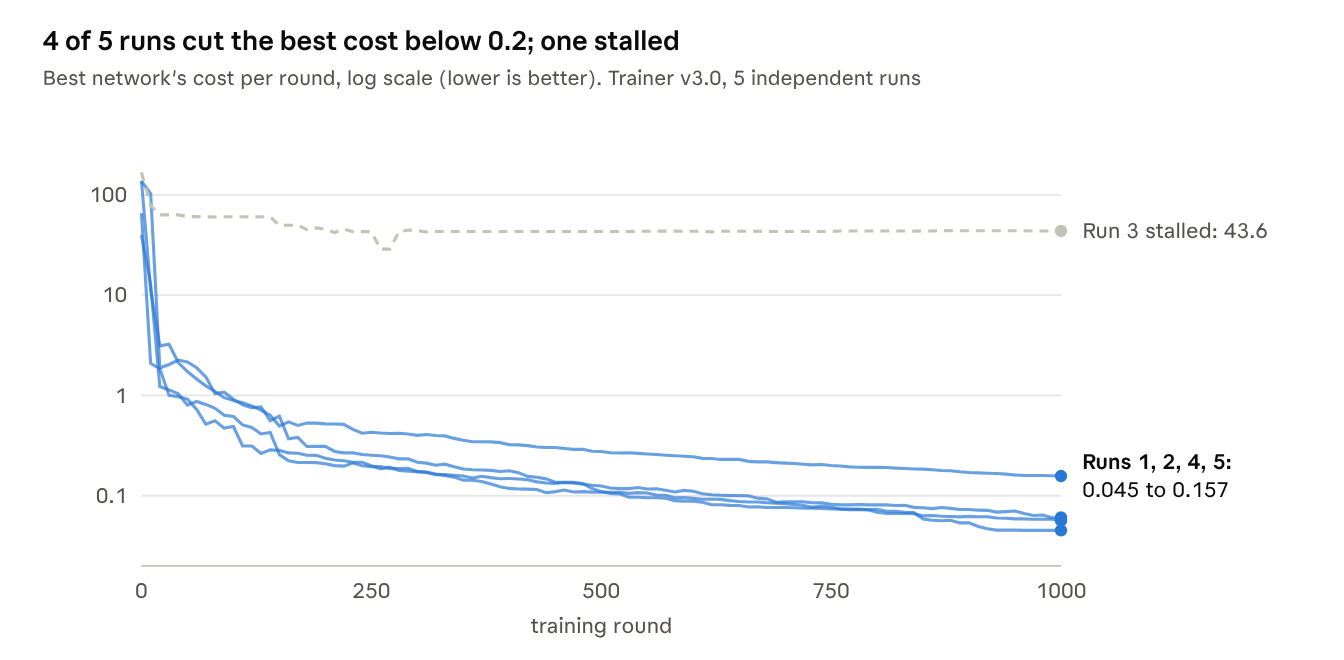
Training curves: four of five runs cut the best cost below 0.2; one stalled at 43.6
2016–2017UNR graduate research groupC++11

ProjectZero

A machine-learning framework written from scratch in C++, with no ML libraries. A feed-forward neural network trained by evolution learned to balance an inverted pendulum on a cart and to fit nonlinear functions.

4 of 5cart runs held within 0.01° of upright
7 of 8functions learned, R² 0.96–1.00
94.6%bandit games: best of 10 slots found
C++11neural networksneuroevolutionQtgnuplot
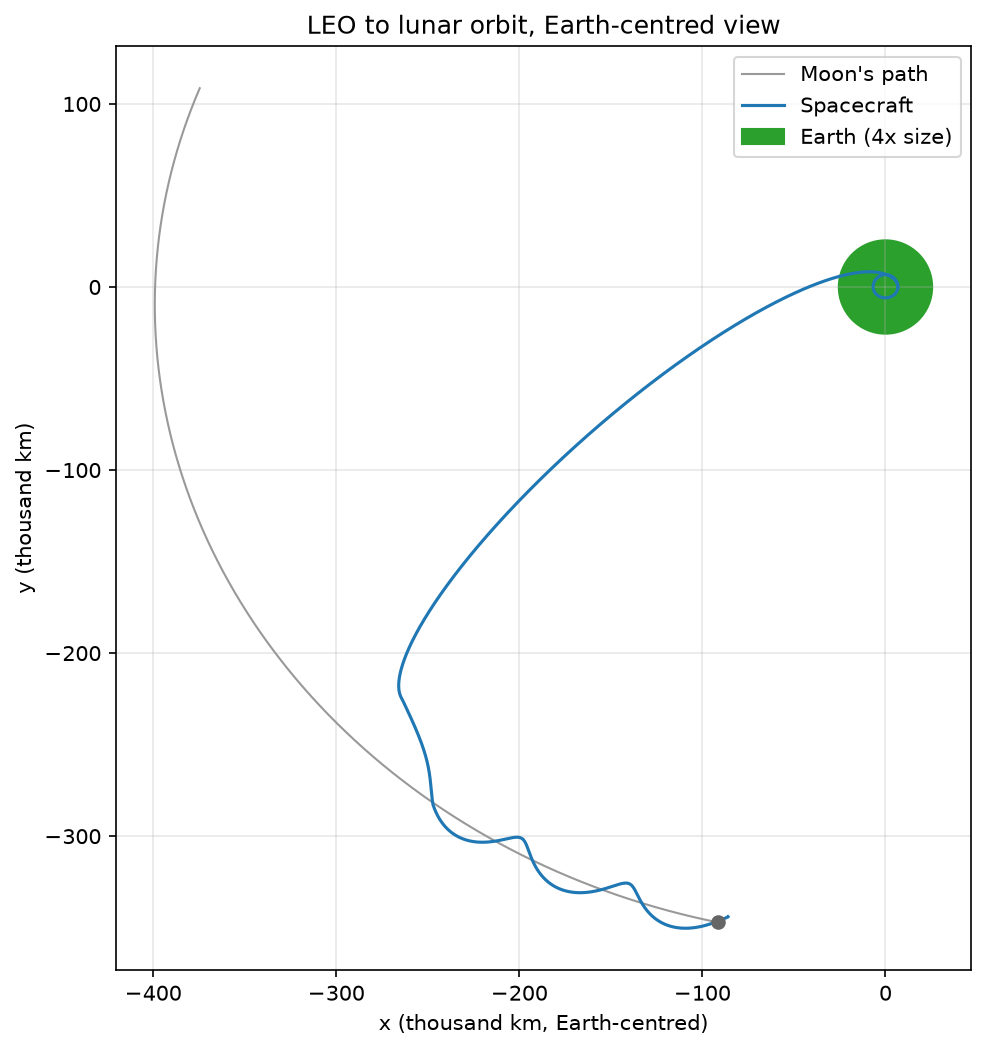
Earth-centred view of the simulated flight from low Earth orbit out to the Moon's path and into lunar orbit
2025Personal researchPythonC++

space_state

An N-body spacecraft trajectory simulator using NASA JPL's DE440 ephemeris, finite burns with real engine models, and the start of a Teensy 4.1 flight computer. It flies a Starship-class vehicle from low Earth orbit into lunar orbit.

7.9 daysEarth-to-Moon flight, captured in lunar orbit
±0.1 km100 km lunar orbit held over 24 h
7 bodiesat real JPL DE440 positions
PythonSciPy DOP853orbital mechanicsJPL DE440FreeRTOSTeensy 4.1

Built from first principles

The core math is written by hand: forward passes, mutation and selection in one project; gravity, integration and maneuver planning in the other.

Re-run and measured

Both projects were cloned from their main branches and run again in November 2026. The figures and tables are from those runs.

Honest about the gaps

Each write-up ends with a code review: what holds up, what doesn't, and what I'd change today.